
Sex Offender Checks in Kendall County
The Texas Department of Public Safety, or DPS, operates the Texas Sex Offender Registration Program and its public registry. Local police and sheriffs submit the registration facts that DPS displays. For a county-wide view, select Kendall in the county field. A person search works best with a last name plus a first or middle name, while a city, ZIP code, address, or radius can answer a place-based safety question. Search spelling variants and known aliases when the first query finds nothing. Then compare the photo, physical traits, address, offense, and registering authority instead of relying on a name alone.
Official channels serve different needs. DPS is the main Texas public source. The law-enforcement authority responsible for an address can confirm where registration questions or suspected noncompliance should go. The National Sex Offender Public Website, or NSOPW, adds records from participating jurisdictions beyond Texas. No verified Kendall County sheriff or city police app offers a separate registry search, so an app is not part of the local lookup chain.
The Fingerprint Applicant Services of Texas appointment system illustrates a separate official identity process:
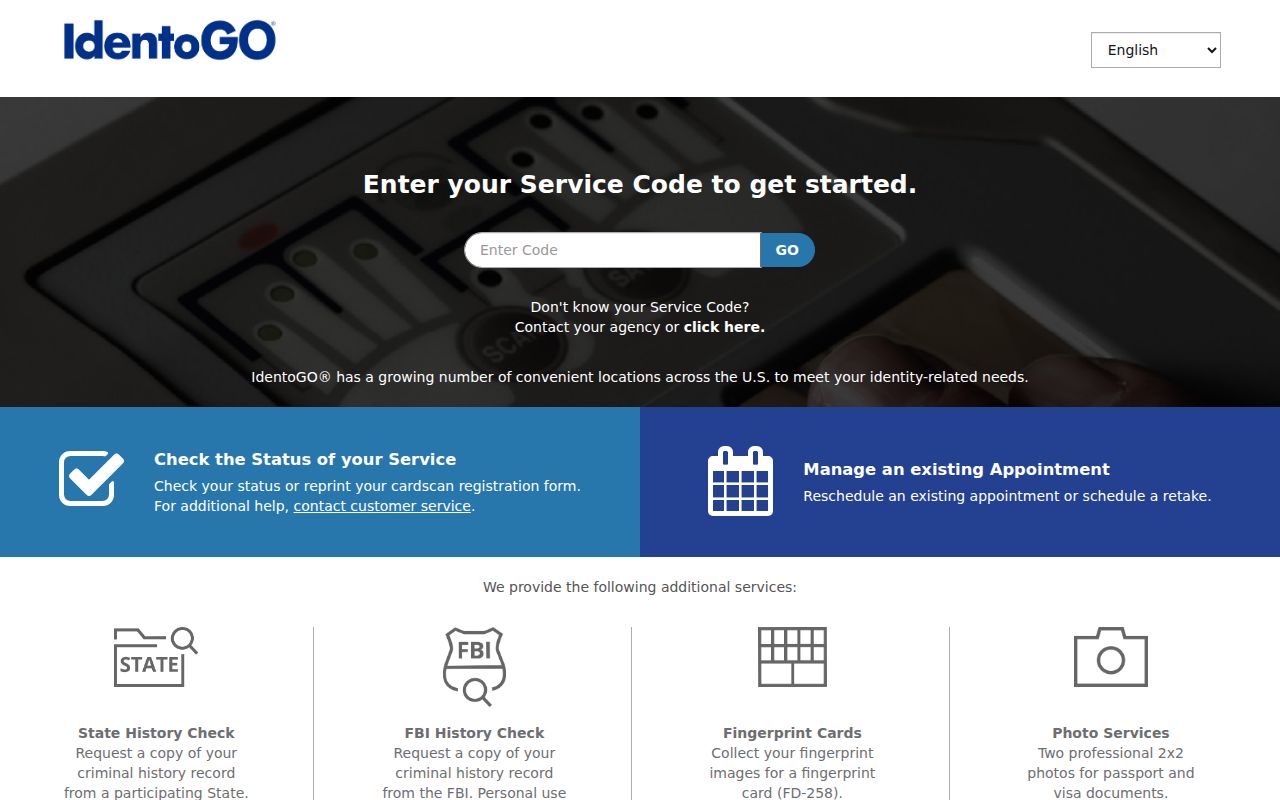
FAST fingerprint appointments require a service code from an authorized requesting agency. They do not replace a public Kendall County registry search, which displays the public subset of registration information.
Kendall County Registry Search Channels
A local search should use two layers when the question reaches beyond one Texas address. Start with DPS and filter the county or city. Next, cross-check NSOPW if the person may be associated with another jurisdiction. NSOPW sends the query across participating public registries, but its coverage is only as current as each jurisdiction's data.
The official NSOPW national search shows the cross-state query layer:
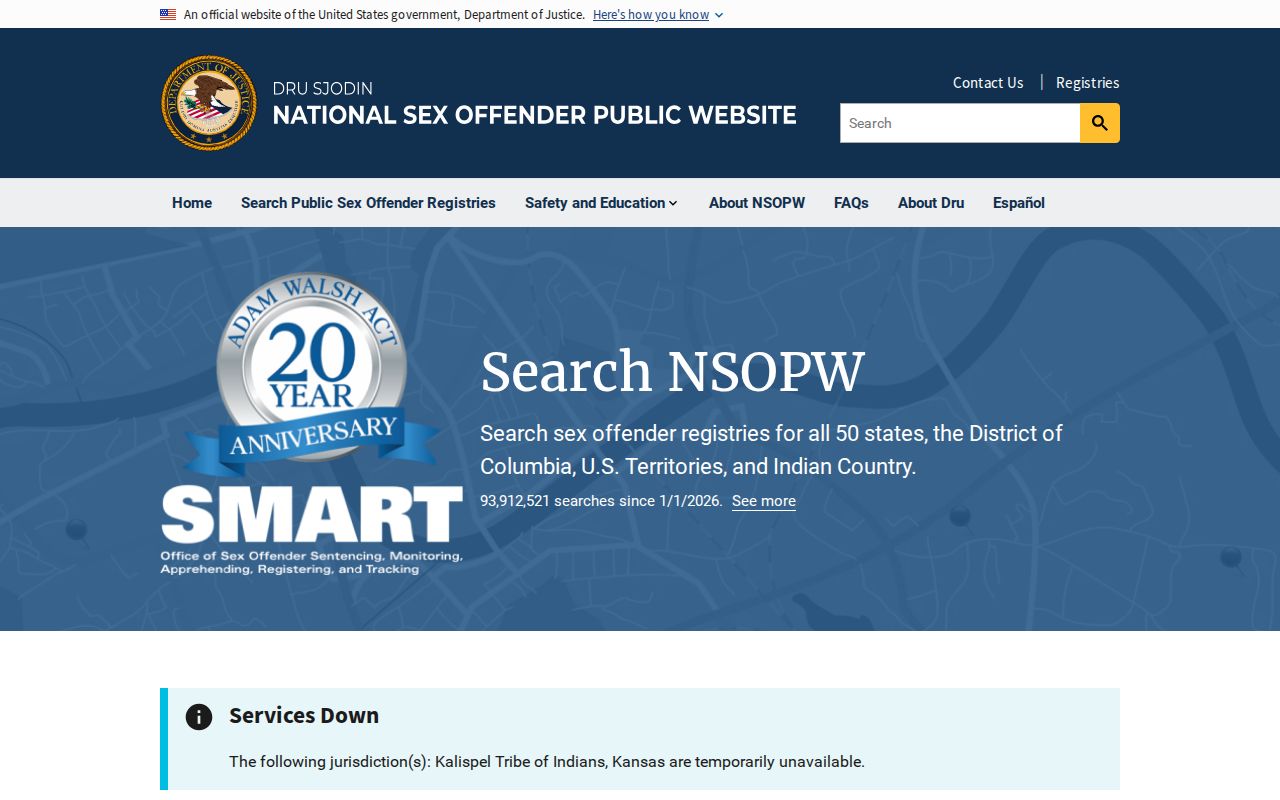
A Texas result should still be opened in the DPS system for its state profile details. An address-radius result is also a proximity finding, not proof that each listed person is home, that no unlisted person presents a risk, or that anyone shown has engaged in recent conduct.
For an official local release, contact the law-enforcement authority that registers the address. Article 62.005 requires local authorities to release the public subset and permits only reasonable administrative costs. That direct channel is useful when the public portal is unavailable or when a jurisdictional question prevents a sound online match.
How to Search the Texas Public Sex Offender Registry
The DPS portal supports name and geographic searches. The controls may change as DPS updates the live service, so use the labels shown on the current screen. Begin with the narrowest facts known, then widen a query if spelling, aliases, or boundary issues may hide a relevant result.
- Open the official DPS registry and read its conditions and warning before continuing.
- Enter a name, or choose Kendall County and add a city, ZIP code, street address, or available radius.
- Review the list or map and compare several identifiers. Try an alias or spelling variant when needed.
- Open the full profile. Read the offense, address, status, risk level, registration duty, local authority, and update fields together.
| Field Label | Type | Required | Notes |
|---|---|---|---|
| Last Name | Text | Name search | Try spelling and alias variants |
| First / Middle Name | Text | Optional | Narrows a name match |
| County | Dropdown | Geographic search | Select Kendall for a county-wide list |
| City / ZIP Code | Text or dropdown | Geographic search | Use Boerne or Fair Oaks Ranch as appropriate |
| Address / Radius | Text and dropdown | Address search | Use only the live radius options displayed |
| Map / List | View control | No | Changes the geographic results view |
The Texas DPS name and address search screen shows the official entry points:
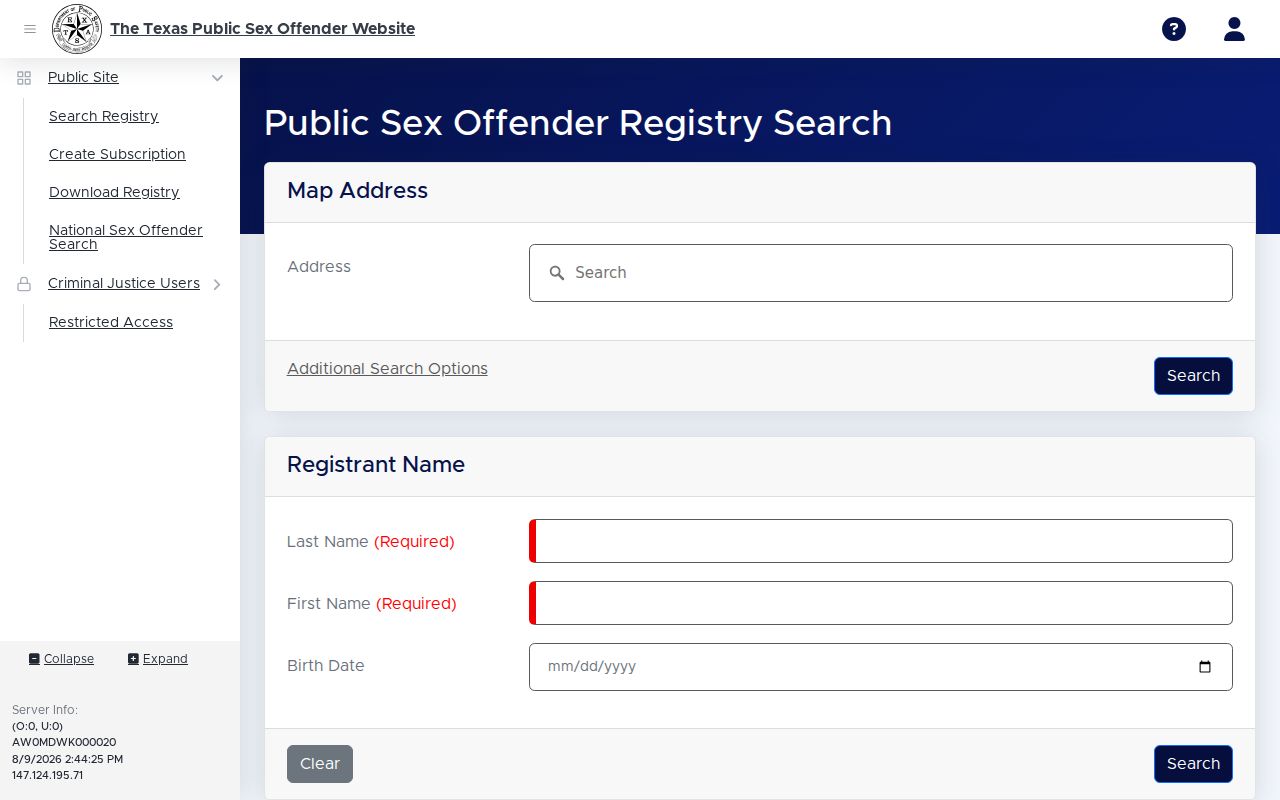
County and radius controls help separate a local safety search from a broad name match. Clear the fields between different approaches so old criteria do not narrow a later query by mistake.
Inside a Registry Profile
A public profile combines identity traits with the legal facts of registration. It can show a current photo, names and aliases, a physical description, address or statutory location, offense details, the local registering authority, and a compliance or absconded status. Vehicle and school or institution information may appear when the statute makes those fields public. Read the last-updated and verification fields because a profile is a maintained record, not a live account of where a person is at each moment.
| Name & Aliases | Primary name and reported alternate names used to check identity |
|---|---|
| Photo & Description | Current photograph plus sex, race, height, weight, hair, eyes, scars, marks, and tattoos when public |
| Registered Location | Residence address or other location information allowed by statute |
| Offense Details | Offense, statute or jurisdiction, conviction date, and public victim-age category |
| Risk & Duty | Numeric Texas risk level and ten-year, lifetime, or calculated registration information |
| Status & Verification | Compliance, absconded or noncompliant notation, local authority, verification, and update fields |
The DPS registry profile layout demonstrates how those public fields are organized:
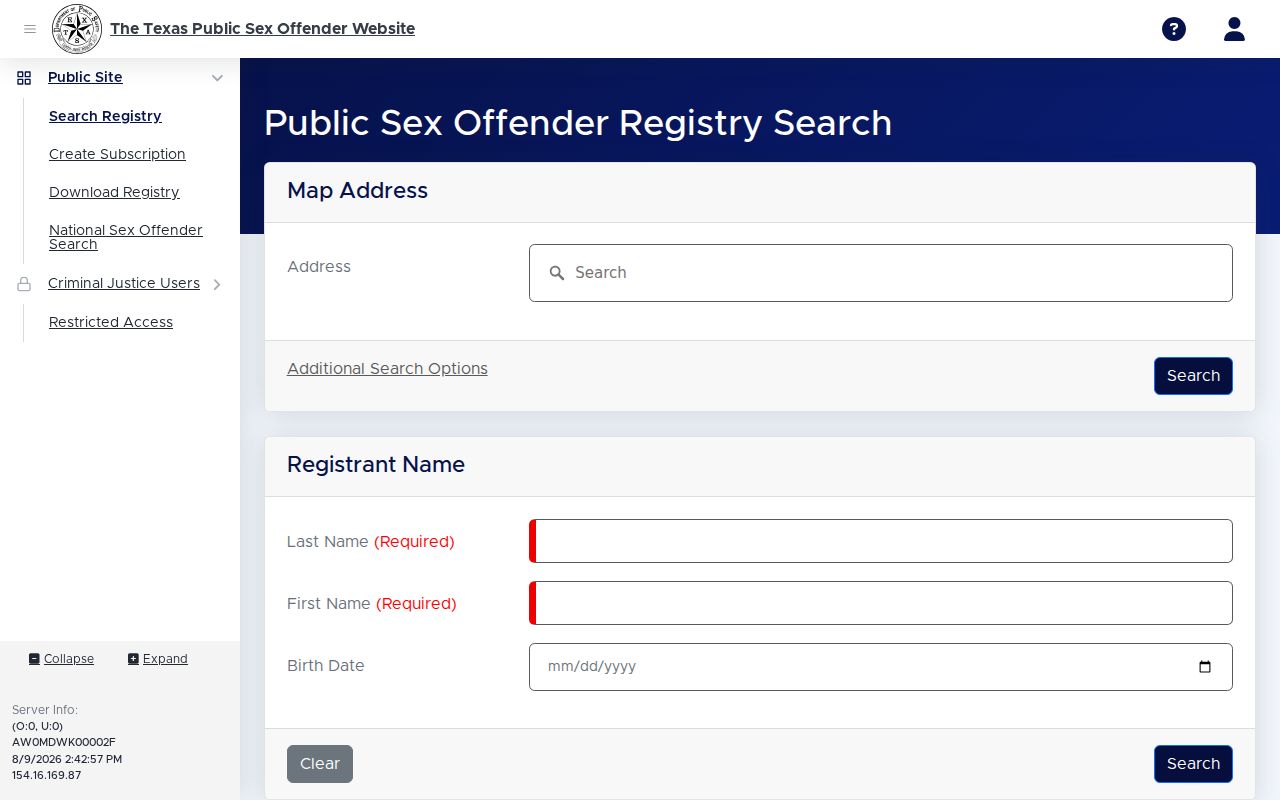
The layout helps a searcher test a match across many facts. It should never be reduced to a photo, name, or map pin alone.
Kendall County Registry Privacy Limits
Public access has statutory limits. Texas Code of Criminal Procedure Article 62.005 excludes Social Security numbers, driver's-license numbers, home, work, and cell phone numbers, other fields withheld by statute, and anything that identifies a victim. An omitted field therefore may reflect the law, not a broken search. DPS must refresh the public driver's-license or identification photograph each year or when an updated image becomes available.
Those limits protect data that does not advance lawful public awareness. They also explain why a registry profile is not a full criminal case file or an unrestricted identity record. For the filed charge, judgment, and sentence, the court clerk remains the record custodian. The registry instead presents the subset that Chapter 62 directs DPS and local authorities to disclose.
Searchers should keep the same boundary in mind when sharing a result. Public status does not turn hidden data into fair material for investigation, nor does it authorize efforts to uncover a victim's identity. Match the official profile and use it for informed safety planning.
Texas Registration Levels and Requirements
Texas risk levels and federal SORNA tiers are not interchangeable. A Texas assessment can assign level 1 for low assessed danger, level 2 for moderate danger, or level 3 for serious or high danger. Civil commitment carries added meaning. Yet the risk number does not set the length of registration. The reportable offense and Chapter 62 control whether the duty commonly lasts ten years after release or discharge, or continues for life.
| Texas Category | Public Meaning | Duration and Verification |
|---|---|---|
| Risk level 1 | Low assessed danger | Offense controls duration and schedule |
| Risk level 2 | Moderate assessed danger | Offense controls duration and schedule |
| Risk level 3 | Serious or high assessed danger | May prompt enhanced notice; offense still controls duration |
| Ten-year duty | Specified reportable categories | Clock generally follows statutory release or discharge rules |
| Lifetime duty | Enumerated serious or repeat categories | Continues for life unless legal relief applies |
Many registrants verify once a year. Specified groups report every 90 days, and civilly committed people may have more frequent duties. The profile and Chapter 62 are safer sources than a generic chart because they connect the person's offense and status to Texas law.
Kendall County Registry Risk Context
Two short labels can create the biggest reading error: risk level and registration duration. A level 1 result does not automatically mean a ten-year duty. A level 3 result does not, by that number alone, prove a lifetime duty. Read the offense and the registration start, end, or lifetime notation beside the risk assessment. That method keeps a Kendall County sex offender record tied to the fields Texas actually uses.
Supervision is another separate layer. Registration under Chapter 62 can continue whether or not a person remains on parole or another form of supervision. The Texas Department of Criminal Justice Parole Division is the official state supervision service shown here:
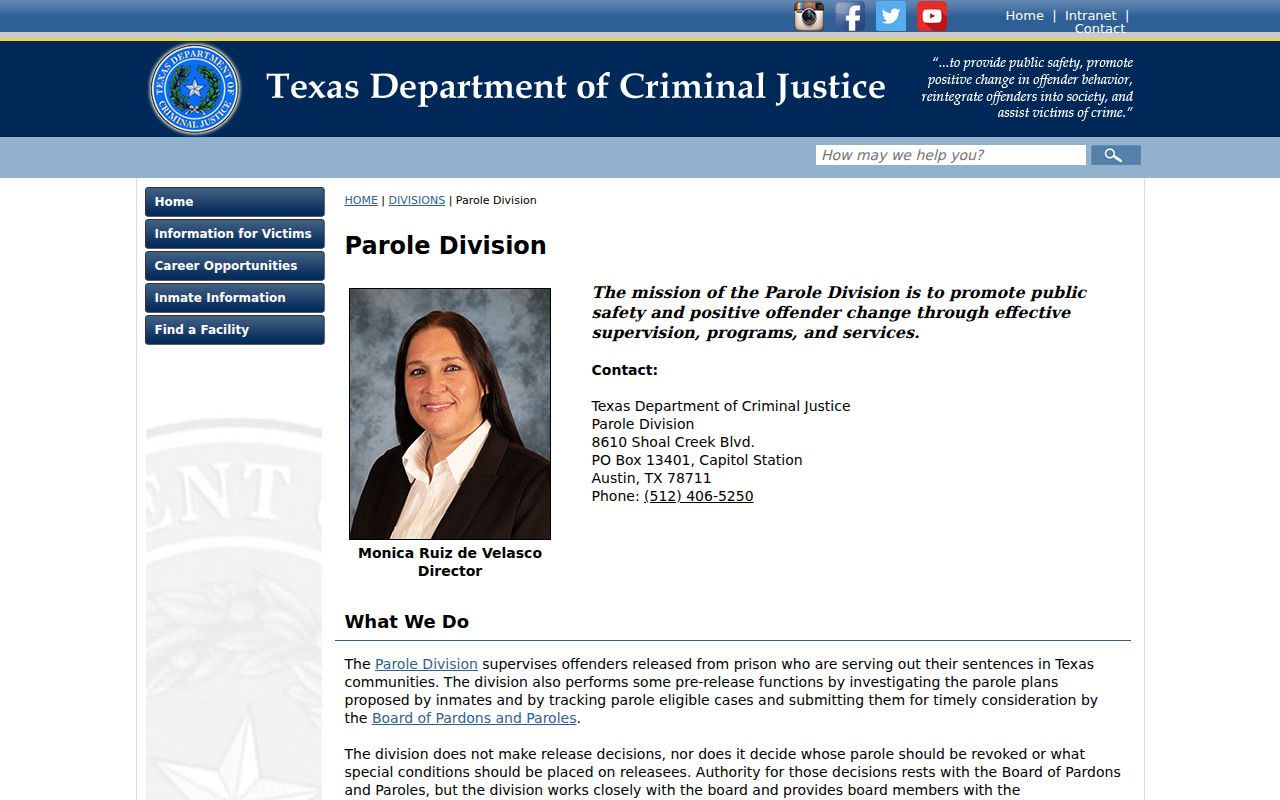
The parole page can explain a supervision channel, but it cannot answer whether a person is registered, compliant, or subject to a ten-year or lifetime duty. Use the DPS registry for those facts.
Note: Risk level, registration length, verification frequency, and parole status are distinct facts; never infer one solely from another.
Community Notification and Lawful Use
Texas uses added community notice in defined cases. The DPS registry FAQ describes postcard notice for certain high-risk or civilly committed situations. The area is generally one mile in an unsubdivided place or three blocks in a subdivided area, and schools receive the notices required by law. These distances describe a statutory notification zone. They are not general residence limits and should not be used to infer present conduct from a map point.
The public registry supports personal, family, and community safety planning. It does not grant authority to confront a registrant, enter property, threaten a household, or organize vigilantism. A listing documents a conviction history and current statutory registration status. It does not prove that a new offense occurred.
Misuse can bring criminal or civil consequences: Texas Code of Criminal Procedure Article 62.005 requires a warning that using registry information to injure, harass, or commit a crime against an identified person may lead to criminal prosecution or civil liability.
When safety is at risk now, call 911. Report suspected noncompliance to the law-enforcement authority that registers the address. Send a Boerne matter to city police, an unincorporated Kendall County matter to the sheriff, and a Fair Oaks Ranch concern to the authority confirmed for the physical location.
A Stale Kendall County Registry Address
A date or address that appears old calls for verification, not confrontation. First, read the last-updated and verification fields. Check the name, aliases, physical traits, offense, and registering authority so the concern relates to the right profile. Next, repeat the geographic search with the current address and a broader Kendall County filter. NSOPW can add a cross-state check when relocation may be involved.
Then contact the registering authority shown on the profile. The Kendall County Sheriff's Office serves county jurisdiction, while municipal police generally handle addresses inside their cities. Call 830-249-9721 to confirm a sheriff registration appointment or reporting route. Do not use a public portal to investigate at the residence.
If officials confirm a reporting issue, they can apply the verification and enforcement process. The public searcher supplies the precise profile and address concern; the agency decides whether the record is delayed, corrected, compliant, noncompliant, or an emergency.